Time, Tools, and Permission to Experiment: A 2026 Pointless Palooza Recap

48-hours, 8 projects, a dash of 8-bit influence, and agentic collaborators. Hackathons foster more teamwork, stronger output, and more learning than ever before.
A few weeks ago, we paused client work for Pointless Palooza, our internal hackathon. It was our largest and most successful Palooza to date! Eight teams shipped projects, prototypes, and explorations in roughly 48 hours.
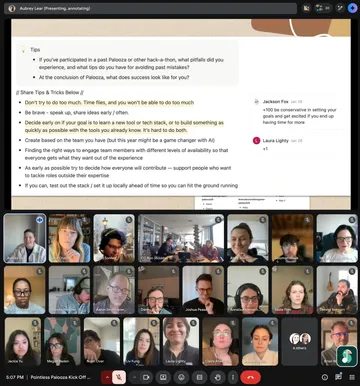
Hacking in 2026
Pointless Corp. is Viget's long-running innovation lab, neither pointless nor a corporation. It's how we make space to try, fail, and learn without the constraints of client deliverables. In past years, Pointless projects required carefully assembled teams with dedicated developers. The mission was the same, but the output looked drastically different.
For example, in 2021, our hackathon hosted a similar number of participants, who formed 3 teams and shipped 3 prototypes, all less functional and polished than what we accomplished this time around. In 2026, tools like Replit, Lovable, Bolt, and Claude Code enabled small teams and even individuals to accomplish far more than ever before.
What We Built
A Custom Obsidian Plugin
Viget's Obsidian enthusiasts used Pointless to explore what happens when you point AI coding agents at your personal knowledge base. The team experimented with Claude Code inside Obsidian, building a plugin that connects your web clipper and file tree to cheap, targeted LLM calls. Their finding: AI tools are becoming effective general-purpose assistants for managing information, not just producing it.
Scooter Commuter
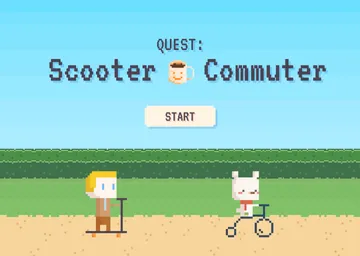
A browser-based game that helps remote workers mentally arrive at their workday through playful moments: waking up, grabbing coffee, or hopping on a scooter. The five-person team of designers, project managers, and strategists went from idea to interactive prototype in 48 hours, tackling a universal remote-work challenge with creativity and warmth. They leveraged agentic tools, eliminating the need for a dedicated developer to get past the starting line.
Shelf Help
Born from Viget's thriving book culture, Shelf Help delivers smarter, more personalized reading recommendations. The team researched what existing platforms get wrong, mapped MVP features, and built a working prototype—starting with a personal pain point and validating a better solution in a short sprint.
A Slack-Based Weekly All-Hands Production Tool
Seeking to cut down on coordination overhead, this solo exploration set out to build a Slack-first tool to manage presenter slots, nudge people through prep, and keep the run-of-show coherent for our internal weekly all-hands meeting.
To-Don’t List
Flip the script on productivity: instead of tracking what you do, track what you successfully don't do. This gamified habit tracker rewards restraint with collectible pixel plants for an isometric garden, all wrapped in a cozy 8-bit aesthetic inspired by Stardew Valley and Tamagotchi. The four-person team used an agentic workflow and AI image generation to build the experience, a great example of a cross-disciplinary group turning a playful concept into something polished and cohesive.
Barnaby
An AI-powered language app that replaces grammar drills with contextual conversation practice, like ordering food or meeting a friend, and adapts to the learner's level. The functional app was built entirely by three UX researchers (no developers) using Lovable and Supabase. Their takeaway: prompt engineering is its own kind of UX design.
Wereabouts
This werewolf-themed location-sharing app blends playful branding with real utility. The team used AI to spark creativity, starting with their mascot. Shipping a working prototype by the end of Day One. Their key insight: AI handled speed, but human judgment handled direction.
Another Awesome, to-be-announced, Project
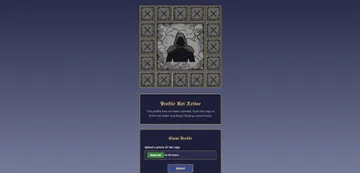
The last project, internally dubbed Dave’s Mystery Project, has not yet hit the Viget blog. What we can reveal is that a cross-disciplinary team worked to combine digital and physical tech advancements to foster connection and friendship, all with an 8-bit spin. We’ll share more in the months ahead. The team remains hard at work and plans to unveil their experience at our upcoming spring all-hands retreat.
Takeaways
AI didn't replace anyone; it changed who could build what. The most striking pattern this year was who was shipping software. A team of three UX researchers built a fully functional language learning app. A DevOps engineer inspired a team of designers to create a gamified habit tracker with pixel art. A client strategist helped architect a location-sharing app. AI tools didn't eliminate the need for expertise; they redistributed what's possible across roles.
Human judgment remains the critical ingredient. Every team used AI to accelerate their build and reported the same thing: knowing when to redirect, override, or step away from AI output was just as important as generating it. Teams treated AI as a capable collaborator that still needs a clear-eyed human in the loop.
Solving real problems creates the best energy. This year's projects tackled genuine needs: coordinating a weekly all-hands meeting, finding the right book, and creating a sense of balance for remote workers. Pointless projects don't need a business case, but we find that solving problems rooted in real frustrations tends to generate the most momentum and learning.
What’s Next
Pointless Palooza has always been one of Viget's most valuable investments. A chance to step outside the day-to-day, experiment freely, and come back sharper. This year, teams moved faster, the diversity of who built what expanded, and the sophistication of what got shipped increased. All reflecting the real shift in what’s possible in our industry today.
The point of Pointless has never been the projects themselves. It's what we carry back: new skills, stronger relationships across disciplines, and a clearer picture of what's possible. This year, what's possible got a whole lot bigger.


