The Power of PowerPoint (and why we should keep making them)

Rhyder Swen, Former JavaScript Developer Intern
Article Category:
Posted on
PowerPoint isn’t just a presentation tool; it’s a fun, creative way to tell stories, share what you enjoy, and connect. It’s still just as cool and useful as ever.
I wholeheartedly love PowerPoint. Using just PowerPoint, people have made entire video games, built presentations in space, and even won Nobel Peace Prizes because of their moving visuals. The slide deck world has simultaneously adapted to a changing world and refused to change in the 13 years since my first exposure, yet slide decks have remained incredibly relevant, even being revitalized in recent years thanks to certain YouTube and TikTok trends. I’ve used PowerPoint since I was in 2nd grade, all the way back in 2012. My very first slide deck was about the caterpillars that were attracted to the milkweed in my neighbor’s garden, and how they would soon turn into Monarch Butterflies! I was a little obsessed with butterflies back then (my favorite song was the profound “Butterfly Driving a Truck” by Caspar Babypants). Even back then, I used that slide deck as a tool to share the things I was passionate about with my friends, giving them a window into the things that made me happy.

PowerPoint’s Origins
The idea behind PowerPoint (originally “Presenter” until they realized that was already trademarked) was simple: it was a presentation software that combined text and graphics on slides, creating visual aids for presentations. People immediately saw the potential. For example, Apple's Strategic Investment Group chose PowerPoint as its first-ever investment a few months before the software’s launch. For a tool that’s now considered so synonymous with Microsoft, I was shocked to find out that PowerPoint 1.0 was actually released exclusively for Mac computers, mostly because Windows didn’t exist yet. It wasn’t until 3 months after PowerPoint’s launch that its creator, Forethought Inc., got acquired by Microsoft — the company’s first major acquisition. Microsoft then integrated PowerPoint into its Office Suite, causing it to explode in popularity, with Microsoft estimating that 30 million PowerPoint presentations were created every day in 2001 (Microsoft). But how did it get so popular?
Slide Decks Naturally Condense Information
Slide decks are primarily used to teach or show someone something new, whether that’s academically, as part of an orientation, or to present the outcome of some work. There’s something about having a PowerPoint that makes it feel like the presenter has more authority over the subject matter. I guarantee that if you have a disagreement with someone and you pull out a PowerPoint to explain, they will immediately trust you more (if, of course, you ignore their concern that you just happened to have a presentation ready to go). A slide deck conveys that you did research, that you thought about the details in advance, and there’s proof that you aren’t winging it.
It’s also a natural way to condense information. It looks ugly if you put every word you say on a slide, and, most of the time, people have a tendency to avoid making something ugly if they can help it. It’s a subconscious push to summarize information. Being able to display the most important points helps listeners who might have accidentally tuned out the presentation and are trying to get back on track or provide a nice reference afterward that helps people remember more quickly and easily than a transcript. Even if a slide only contains images, our brain connects those images to what the presenter says, allowing for easier recall. The natural summarization of points allows presentations to be more memorable for years in the future.
People increasingly depend on AI summaries, which further proves just how important it is to structure and convey information efficiently and effectively in today’s world. People value concision far more than detail now, so long as both convey the same overall information.
Slide Decks Tell a Story
Although there are ways to skip around in a presentation, slide decks are inherently linear. They encourage you to present your information in a way that tells a story… even if that story is the state of the finances in your company. It forces you to think about how you order your slides; about what information transitions smoothly from your previous points. It establishes a timeline that makes it easier for the audience to follow, and they will remember a general location for a certain slide if they have follow-up questions when you’re done presenting. Plus, it’s human nature to engage with stories, to be more likely to enjoy something that’s presented in a narrative form.
I can still remember one lecture in my CHEM 111 class in my first semester of college where the professor was incredibly proud of an animation on one of his slides. He hyped us up the whole lecture, and when he finally got to the slide, it felt like everybody in that 521 person class was on the edge of their seats (which is shocking considering how few people usually paid attention). The animation itself was a small fade effect, but the class loved it, and I’m certainly not going to forget about gas laws anytime soon because of that. Not only were the visuals basically necessary to learn chemistry, but the animation engaged an entire theater of people for something so small. Being able to tell a story with your slide deck is one of the most powerful and memorable things you can do when sharing information.
Slide Decks are a Creative Medium
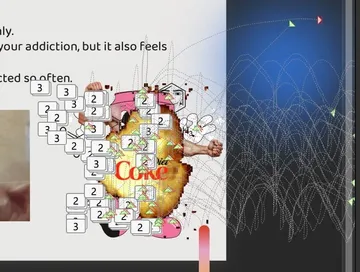
Viget has a weekly tradition of gathering everyone in the company for Free Lunch Friday, and part of that event is the LabShare, a 10-12 minute presentation from someone in the company about whatever they want. I had my LabShare last week, where I talked about Diet Coke’s ridiculous history. I spent way too long working on that PowerPoint, pushing the program to its limits; I had tons of gifs, sound effects, and, of course, wacky animations on every slide, making the total file size land at a whopping 179MB. There are so many tools built in — a lot of which are so obscure that most people don't even know they exist — that it makes it easy to give your audience a glimpse into your thought process and help them see the world through your perspective.
Presenting a slide deck that I put so much time and passion into was some of the most fun I’ve had in a while. Seeing people laugh at my jokes and become genuinely invested in the story I was telling made all the effort worth it. Sure, I could’ve done everything in a video or just by explaining, but having a slide deck made the whole experience so much more interactive and personal: it allowed me to say more without explicitly saying any of it, and it allowed my audience to get an easier feel for the vibe I was trying to convey. This experience is why slide decks have taken on a whole new meaning for the younger generations. “PowerPoint nights” are just this; a group of friends getting together, each preparing a slide deck in advance, and forcing everyone to listen to what they have to say. These PowerPoint nights, and events like Viget’s Free Lunch Friday, are incredible ways to deepen connections with everyone involved and provide an easy conversation topic for the future. I encourage everyone to try to organize a PowerPoint night with their friends; it’s an experience that you won’t forget.
TL;DR
Keep making slide decks, whether it’s a PowerPoint, a Google Slide, or any of the other alternatives that are popping up online! Whether it’s for your job or for fun, if you’re trying to teach something to someone, make a slide deck. Not only does it help keep people engaged by giving them an immediate summary of what you’re talking about, but it’s a wonderful resource to look back on afterward if you need to refresh your memory. If you do decide to organize a PowerPoint night for your friends, I’d encourage you to play around with the tools that PowerPoint gives you (especially the animations) and use them to imbue as much of your personality into your presentation as possible. After all, the more fun you have with it, the more contagious your passion will be!


