The Art of Doing Nothing: Building the "To-Don’t" List


How we grew a pixel plant garden with an experimental agentic workflow.
Rethinking the concept of your to-do list and ever-growing checklists, our hack-a-thon team decided to flip the script. We didn't want to build another app that tells you what to do; we wanted to build one that rewards you for what you don't do.
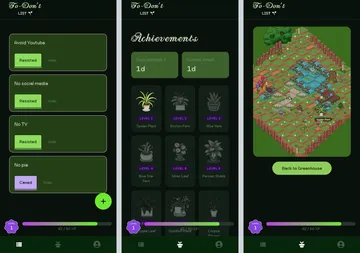
Meet the To-Don’t List: Productivity’s mischievous twin. It’s a gamified habit tracker where "doing nothing" is the ultimate achievement. Instead of checking off tasks, you’re resisting temptations. Whether it's "Don’t check social media before noon" or "Don’t eat the whole cake," every moment of restraint earns you progress.
Design & Experience
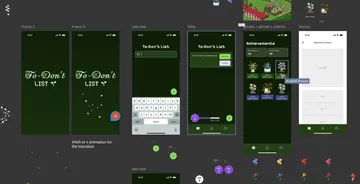
We wanted the app to feel like a cozy garden, inspiring growth and mindful habits. We leaned heavily into an 8-bit pixel art aesthetic, drawing inspiration from Stardew Valley, Pokémon, and Tamagotchi. We crafted a logo with a pixel script font paired with a delicate plant sprout. Riffing on the garden elements, we included falling cherry blossom petals for a login transition.
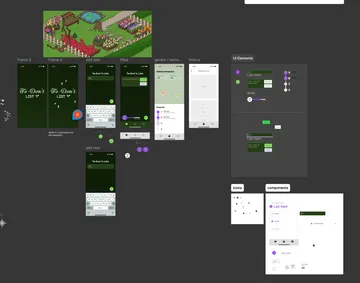
Our rewards system was devised around giving users plants they can collect and add to a garden when they succeed at resisting an item on their to-don’t list. Instead of checking boxes, users choose between "Resisting" or "Caving In.” As users level up in their habit tracking journey, they’ll collect plants and grow an ever-expanding isometric garden. Our pixel plant garden was grown with the help of AI image generation using ChatGPT and Nano Banana. As users progress, they’ll receive increasingly rare and unique plants.
The Build: Surfing the "Vibe-Coding" Waves
We used this hackathon as a laboratory for agentic workflows. Rather than writing every line of code manually, we leaned into a "vibe-coding" approach, iterating through prompts and managing a fleet of AI agents.
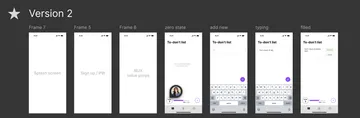
Starting out with wireframes in Figma, we decided to feed the core app flow into Gas Town to begin building the app. As we continued iterating on wireframes and getting into high-fidelity design comps, we continued to feed our Figma output into Gas Town for a rapid iterative development process. Claude was the main agent under the hood supporting this.
The Gas Town Experiment
Our experimental agentic framework used Gas Town, with Claude Code as the agent runtime. For deployment and hosting, we used Vercel. While this framework allowed us to bring the app live almost immediately, it wasn't without its quirks.
Overall, this approach is pricey and burns through usage tokens at record pace. While a significant amount of progress was made over a short period of time, it still requires a skilled human in-the-loop to supervise and troubleshoot.
Gas Town is a strange place on your machine where you act as an Overseer. At its core it is a workspace manager that is trying to help you coordinate multiple agents working on different things across multiple projects with a git-backed context persistence layer. For this experiment, we were only working on a single project, or what Gas Town calls a Rig.
Our Gas Town "workforce" consisted of a plethora of agents. Some of those agents were persistent and are still around, while others joined for a little while before disappearing into the ether.
Here’s what our workforce ended up looking like with some agent counts for context:
- Town Agents:
- The Mayor (1): The primary AI coordinator who knows about all the projects and agents. Their job is to oversee the town.
- The Deacon (1): A patrol agent whose whole job is to remind the town's workers to do their job.
- The Dogs (3): The Deacon’s personal crew, they handle maintenance and handyman work so the Deacon can stay focused on the patrol.
- Rig Agents:
- Witness (1): The Witness patrols the Polecats and the Refinery to make sure they keep their work moving along.
- Refinery (1): A dedicated engineer agent who handles the Merge Queue to make sure that all the changes are merged to main one at a time and that none of the work is lost to a bad merge.
- Polecats (0 - 15+): Ephemeral workers who show up to work on a ticket, produce a Merge Request, and hand it off to the Merge Queue.
- Crew (2): The Crew are persistent agents on the Rig who work directly for the Overseer (human in the loop). They are similar to the long lived sessions you might already be having with your favorite coding agent.
- Jimmy: Jimmy acted as a dedicated coding escape hatch when a complex enough task like the garden rendering system needed a human in the loop to handle, or when it was faster to work directly with an agent instead of opening a ticket for a Polecat to handle.
- The Planner: Planner was the most important member of the Crew. They were where we went to have context-aware planning and architecture design sessions. The Planner was responsible for building the tickets, assembling them into Convoys (units of work that are tracked for delivery), and eventually mailing the Mayor to let them know that a Convoy was ready to dispatch.
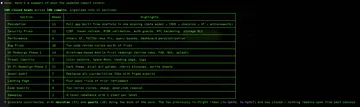
A word of caution: Gas Town is fascinating, but weird, and we would echo its author’s own disclaimers “WARNING DANGER CAUTION” and “You probably don’t want to use it yet.” We wouldn’t recommend this app development approach, but it was an interesting exploration in rapid prototyping. At the end, we netted out with 140 commits and 108 tickets to build the final result.
Key Takeaways & Lessons Learned
Building with a fleet of AI agents changed the way we thought about rapid prototyping. Here’s what we walked away with:
- AI as a Spark Plug: AI-generated outputs often provided a "twist" on an idea that sped up some iteration and brainstorming.
- The Cost of Speed: Agentic workflows get you to an MVP incredibly fast, but they come at a price premium. High token usage means you need to be strategic about when to let the agents run.
- Human-in-the-Loop is Mandatory: Agents can build the skeleton, but crafting the core experience and polished interface requires nuanced expertise and guidance from a human.
The Verdict
Is the world ready for a fleet of AI agents to build our apps? Maybe not entirely. But for a hackathon project, it allowed us to dream big, move fast, and build a cozy garden to help you grow good habits.
Try it out: https://todontlist.vigetx.com


