Labshares: Internal Talks that Build Skills, Connection, and Culture


How a simple public-speaking ritual strengthens individual growth, shared learning, and company culture.
Most people would rather be locked in a dark room with a poisonous snake dressed as an evil clown holding a giant spider than give a speech.
And yet, the ability to speak clearly, confidently, and thoughtfully in front of other people is one of the biggest career advantages a person can have. It doesn’t require unique talent, it takes practice. It’s something we’ve practiced at Viget for more than 25 years.
What’s a Labshare?
Every week, we gather for Free Lunch Friday (FLF), our weekly staff meeting. The schedule is simple: 15 minutes of unstructured social time, 30 minutes of company updates, ending with a 15-minute Labshare. That’s a full hour of otherwise billable time for the full team – an expensive investment that continues to be worth every penny.
Pre-Covid, FLF was mostly an in-office experience, so a presenter would enjoy a live studio audience of a dozen or two, with another 50 or so folks joining via video.
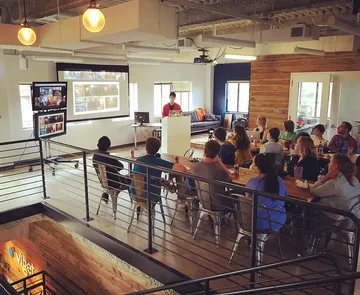
Labshares are 10-12 minute talks followed by a few minutes of Q&A. Everyone at Viget – from interns to 20 year vets – is asked to participate, with new hires prioritized within their first few months. Topics are entirely self-selected and don’t need to be work-related, as long as the speaker is passionate about the subject.
I’ve enjoyed well over 1,000 Labshares in our quarter-century of business. To give you a sense of the variety, a few favorites include:
- Ruby & Mid-90s Hip Hop, by David Eisinger
- Our Brains, the Invention of Reading, and the Internet, by Blair Culbreth
- Finding & Eating Wild Mushrooms, by Todd Moy
- Emotional Processing + Conflict Resolution, by Nathan Long
- Dreams, by Maria Taborda
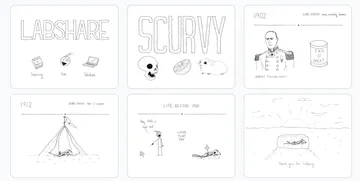
Some presenters hand-draw their slides, like the legendary Chris Jones did in his 2016 Scurvy Labshare.
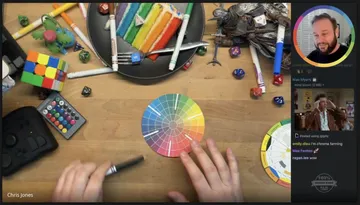
The only person who could outdo 2016 Chris Jones was 2025 Chris Jones, who supplemented his slides with a live demo of his desktop (no, that’s not AI) to give us real-world explanations for why color doesn’t exist.
Most presentations aren’t this fancy, so don’t let the high bar discourage you, future Labshare presenters. Great visuals are awesome, but not core to what makes the Labshare tradition so special.
Why encourage knowledge sharing?
Similar to our article writing approach here on viget.com, a lot of the value is in the prep. When an ambitious person challenges themselves to teach their peers about a topic, they’re going to make sure they know their stuff. This forces clarity, conviction, and judgement – skills we rely on daily in our client work. While the topics aren’t always work-related, the process helps foster our culture of learning and sharing.
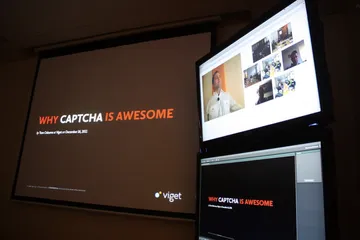
When curious people see a peer they respect excited to share insights about a topic they’re into, they perk up, ready to soak it in. These aren’t boring training topics from HR or repetitive vision statements from the CEO (ahem). The topics are usually a surprise to the audience, and one of the things that makes our culture unique – we love learning new things.
How do Labshares foster connections?
It’s hard to get to know each other, especially for remote teams. Encouraging new staff to present within their first few months gives everyone a chance to put a face, voice, and personality to a name.
What’s shared is often personal. It might be a hobby, like Billy French’s Magic or Ben Travis’ Salsa Dancing. An interest, like Kevin Powers on Pangolins or Danny Brown on Squirrels. Or something more meaningful, like Queer 201 by Matt Sontag or Immigrants by Leo Bauza.
Inevitably, we all get to know the presenter better – not just what they know, but who they are.
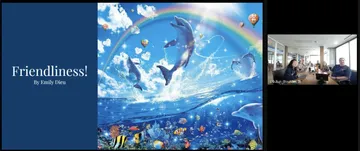
For the presenter, preparation matters. A required practice run, including coaching from our People Team, sets them up to succeed. It’s a friendly audience, so even the occasional technical difficulty or misstep is met with encouragement. Speakers can read through the positive (often hilarious) Slack comments and emojis that mirror the timeline of the talk.

The accomplishment of delivering a quality Labshare is a confidence-boosting professional development milestone and a team-connecting culture event.
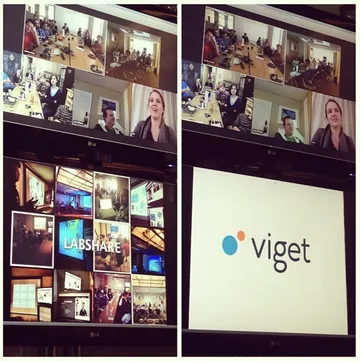
Like most things at Viget, the quality of Labshares has improved over time. Early on, we often skipped rehearsal and didn’t emphasize a strict time limit, leading to exhausting overruns and frustrated audiences. So much so, we almost scrapped the tradition entirely.
What ultimately saved Labshares wasn’t lowering the bar, it was adding structure. Clear time limits, required practice runs, and direct coaching didn’t stifle creativity. They provided support, reduced stress, showed respect for everyone’s time, and improved the experience for both presenters and audiences.
Why is public speaking important?
We’re all client-facing consultants. The bizdev team pitches to prospects. PMs present kickoff decks. Designers share concepts and screens. Developers walk through code and demo software. These are all high-stakes client interactions, and they go better with practice. Labshares provide a great format for us all to improve not just presenting, but handling live Q&A as well.
Bigger-picture, Viget is a place where people grow professionally. Public speaking is an important part of that growth. I received this email from a Viget alum recently, and it made me proud for us both:
"[At our company all-hands meeting] I was invited to speak to a room of ~160 folks. It went great. I felt confident, got lots of positive feedback, and earned some public kudos from the CEO.
It got me reflecting on how much I've developed my public speaking confidence and skill-set over time. That's due, in very large part, to the trust and stretch opportunities you provided when I worked at Viget. Between Labshares, client presentations, and State of the Web's, I learned so much and had so many opportunities that have continued to pay dividends in the years since.
So... thank you! Thanks for creating such a great company, where learning and growth aren't just encouraged but are expected. And where a young, nervous data analyst could be pushed outside his comfort zone to grow in unexpected ways."
Reflecting on the weekly Labshare tradition, I’m reminded how much creativity, curiosity, and care exists in the people I’ve been fortunate to work with, past and present. With just enough structure to ensure consistency and plenty of freedom to let people be themselves, Labshares are one of the most reliable ways we grow skills, build camaraderie, and stay genuinely interested in each other.
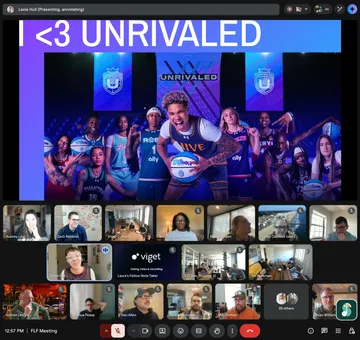
I’m already looking forward to the next 1,000.


