
When people ask me why I chose to be a designer, my initial response is usually that I have always loved art. As a kid, I was especially captivated by people's quirks, beauty, and inventions. I kept a notebook where I would envision characters, each with their own unique outfits and personalities. My yearning to tell stories and express my creativity carried into adulthood, and if you chose to be a designer or artist of any kind, I imagine yours did too.
One common quality of designers that I resonate with is our innate curiosity. We wonder about the world around us and what drives people to behave the way they do. In school, I was fascinated by the intersection of psychology and design. We are taught to dissect a particular audience's goals and frustrations, and then piece together solutions through visual artifacts. When we blend that understanding with our own creative vision, the result can both help people and leave a positive, lasting impression.
For many of us, our stories followed a similar path: an interest in drawing, photography, ceramics, film, among others. The spark that fueled our desire to pursue design is alive, however that shows up in our professional and personal lives.
Spotlight on your novel ideas
One silver lining of AI becoming faster and better at production work is that it leaves space for the creative art kid to shine. AI knows what's trendy, simple, and familiar. For many people's purposes, that's enough.
However, I've noticed in the agency world that the importance of human creativity is still evident, if not increasing. Clients respond well to details in their websites and products that speak to their values and how those attributes manifest in the physical world. They want their brands and touchpoints to make a lasting impression where people think, "This is actually something really different," or "This is thoughtful and beautiful."
Appreciation for quality, bespoke design work isn't a new concept, but we've become accustomed to aesthetically pleasing, mainstream design patterns that are easily replicable with AI. As with anything that comes in excess, they start to feel like a commodity. So the pendulum is swinging toward design that's more experimental and exemplifies personal taste. Yeah, a human made this. It's an odd flex.
For designers, moving towards unconventional styles or approaches can be intimidating, especially because we've studied patterns that are accessible and reliably suit many of our clients' needs. While it's important to not abandon best practices for the user, there's an underlying current in the industry at the moment that asks of us what else is possible.
I'm still figuring out how to embrace the rate of change. Regardless, I continually return to my belief that good design begins with observation. Asking thoughtful questions, collaborating, and defining the story lay the groundwork for experimentation. We work through different iterations and discover something we didn't imagine initially. That's often where our time spent as designers has unwavering value and the best ideas originate.
So how can we nurture our inner art kid?
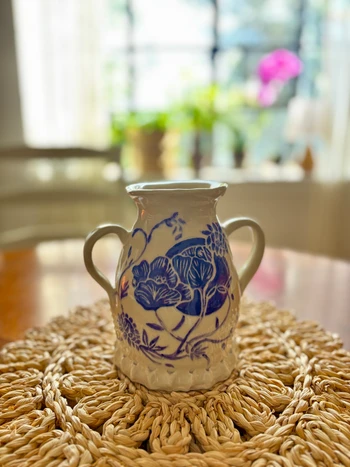
For me, it starts off screen. As I've started my professional career, I've felt a calling to reconnect with the hobbies that drew me to design. I love to paint and draw, and recently I started taking up ceramics and writing songs. It's a fulfilling use of time and a way to stretch my creativity. Recently, at the Viget design offsite, we spent a day off screen exploring the National Gallery of Art in DC, and left feeling inspired and that we all took away something new.
I find that artistic hobbies hone my creative muscle and make me feel more energized and inclined to explore new ideas. I feel grateful when I tend to the part of myself that wants to create for fun and for the sake of it, no matter what project comes through the door. You never know what you'll discover in the process of making something.
For you, it may be reading or consuming media that inspires you. Spending time in nature or with friends and family. Travel. What recharges and fills one's creative cup looks different for everyone. Ideas come to us when we're not expecting them—while we're driving, making dinner, or having a conversation with a friend.
I encourage you to go out into your community and intentionally notice what's around you. What do you find beautiful? What inspires you in your environment? How do you feel in the spaces you enter? What might you be taking for granted? Why?
Where AI fits in
In school, I noticed that the more I learned how to use a tool or medium such as Adobe Illustrator, the more the door opened to new ideas. When I practice guitar regularly, I can find unique chord progressions with more ease. Similarly, when we view AI as something that can bridge the gap between concepts and reality, does our palate expand?
The most helpful, immediate use for AI I've found in my work is automating the parts that are repetitive, time-consuming, or oriented around pattern-recognition. For example, I now spend more time strategizing the core elements of a design system rather than setting up all of the variables. It's made prototyping and animating more accessible. I'll storyboard a motion concept, articulate my thoughts, and Claude or Figma Make helps bring the idea to life while allowing me to play with different approaches.
If you're curious about the technology, there are endless possibilities for what you can do with it. That doesn't mean you have to abandon the core part of you that loves to create things that speak to people.
If you need a sign to take a risk and do something different, this is it.
Paint, throw something at the wall, and let yourself fail. Experiment and have fun! While it's likely to make you a better designer, it will certainly make you a more joyful person. The art kid is still within all of us, and tapping into them can be one of the most meaningful ways to impact the world around you.